
The 'What's For Dinner?' Problem (And How to Actually Solve It)
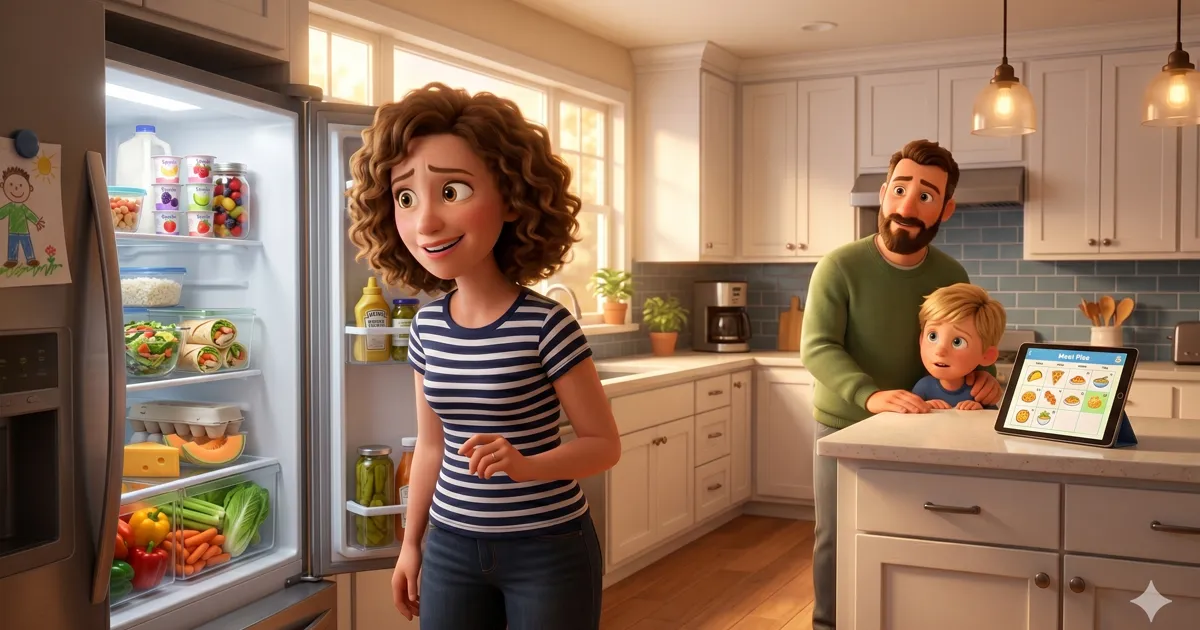
The Question That Ends Marriages
Not literally. But you know the feeling.
It's 5:15pm. You just got home. Somebody needs a bath. The dog needs to go out. There's an email you forgot to answer. And from across the house, like clockwork, comes the question:
"What's for dinner?"
You have no answer. You have never had less of an answer. The refrigerator contains half an onion, some leftover rice, and a block of cheese of uncertain age. In a desperate act of domestic hope, you open the freezer, stare into it for thirty seconds, and close it again.
This is not a personal failure. It is a systems failure. And it is happening in millions of households tonight.
Why "Meal Planning" Advice Usually Doesn't Help
There's no shortage of meal planning content online. Pinterest boards full of colorful bento boxes. Influencers who apparently spend Sunday afternoons cheerfully portioning chicken into identical glass containers. Thirty-day meal prep plans that require a second refrigerator.
Most families try this. Most families last about a week.
Here's why the standard advice fails:
It's Optimized for Ideal Conditions
Meal planning guides assume you have a full weekend afternoon free, a stocked pantry, and children who eat what you cook. Real family life has none of these things with any consistency.
It's a Weekly Project, Not a System
Batch-cooking and rigid weekly menus require a fresh effort every single week. One busy week where it doesn't happen and the whole thing falls apart. What families need isn't a plan — it's a system that runs on low effort even when life gets loud.
It Doesn't Account for the Whole Family
When one parent does all the meal planning, the other parent becomes helpless. When kids have no input, they eat things grudgingly and the whole process feels like a negotiation. The best meal systems involve everyone — not because it's a nice idea, but because buy-in makes execution dramatically easier.
What Actually Works: A Realistic Framework
Build a Family Rotation (Not a Meal Plan)
Instead of choosing new meals every week, create a rotation of 10-15 dinners your family already likes and will actually eat. Include everyone in building the list. Post it somewhere visible or keep it in a shared app.
Now your weekly planning isn't "what should we eat?" It's "which 5 from our list?" That's a much lighter cognitive lift, and it gets progressively easier as the rotation becomes familiar.
Plan Around Effort, Not Just Ingredients
Not all nights are equal. Monday after a long day is a different situation than Saturday afternoon. Plan your rotation accordingly:
- Low effort nights: 20-minute meals, sheet pan dinners, pasta, tacos
- Medium effort nights: Meals with some prep but not complex
- Weekend nights: Something more ambitious, or the meal that generates leftovers
When the plan matches your actual energy levels, you're more likely to follow it.
Do a Weekly 5-Minute Check-In, Not a Full Planning Session
You don't need a Sunday afternoon ritual. You need five minutes, once a week, to answer three questions:
- What's on the schedule this week that affects dinner? (Late nights, activities, guests?)
- What do we already have that needs to be used?
- Which 5 meals are we making?
That's it. Write it down somewhere the whole family can see it.
Get the Grocery List Out of Your Head
The meal plan is useless if you don't have the ingredients. The moment you decide what you're making, add what you need to a shared grocery list — not a mental note, not a scrap of paper, a shared list that whoever is at the store can actually see and use.
This single habit eliminates more "what's for dinner" chaos than almost anything else.
"I meal planned every Sunday for a month. Then we had a crazy week, I skipped it, and somehow it never came back. Now we're back to chaos." — Inspired by real conversations in parenting communities
The FamHero Way: FamHero keeps your meal plan and grocery list in the same place, visible to the whole family. No more "I didn't know we were out of that" at 5pm, and no more dinner decisions living in one parent's head. The meal planning and grocery list features are built to work together — so your plan actually connects to your shopping, and everyone knows what's coming.
Getting Kids Involved (Without Losing Your Mind)
Kids who have input in what the family eats are more likely to eat it. This is maddeningly true.
A few ways to involve them that don't turn dinner planning into a circus:
Give them limited choices. "Do you want pasta or tacos Tuesday night?" feels like real input. "What do you want for dinner every night this week?" is chaos.
Let them pick one meal per week. One child's choice, once a week. It creates investment without ceding full control of the menu.
Let them help with one step. Setting the table, washing vegetables, stirring something on the stove. Kids who touch the food are slightly more likely to eat it. Slightly.
Build in a "family favorite" slot. One night a week is always a meal everyone loves. Even on hard weeks, that anchor makes the plan feel stable.
The Grocery List Is Half the Battle
Most dinner chaos doesn't start at 5pm. It starts three days earlier when someone didn't add the key ingredient to the list, or when two people bought the same thing while the actual missing item sat unnoticed.
A shared grocery list that everyone can see and add to — in real time, from wherever they are — eliminates a huge percentage of the "we don't have what we need" problem.
One parent at work remembers you're out of olive oil? They add it. A kid notices there's no orange juice? They add it. Nobody has to remember to tell anyone, because the list is the communication.
The Goal Isn't Perfect Meals. It's Fewer Decisions.
The "what's for dinner?" problem is a decision fatigue problem. You're asked to make a fresh, high-stakes choice every single day, usually at the exact moment your cognitive resources are most depleted.
The solution isn't to become a better meal planner. It's to front-load the decisions so that by 5pm, the answer is already somewhere visible — and it's a good one.
Start small. Build the rotation list this weekend. Put five meals on the calendar for next week. Get the grocery list into a place the whole family can see.
The question will still get asked. But now you'll have an answer.