
Why Gamification Works for Kids (And How to Use It at Home)
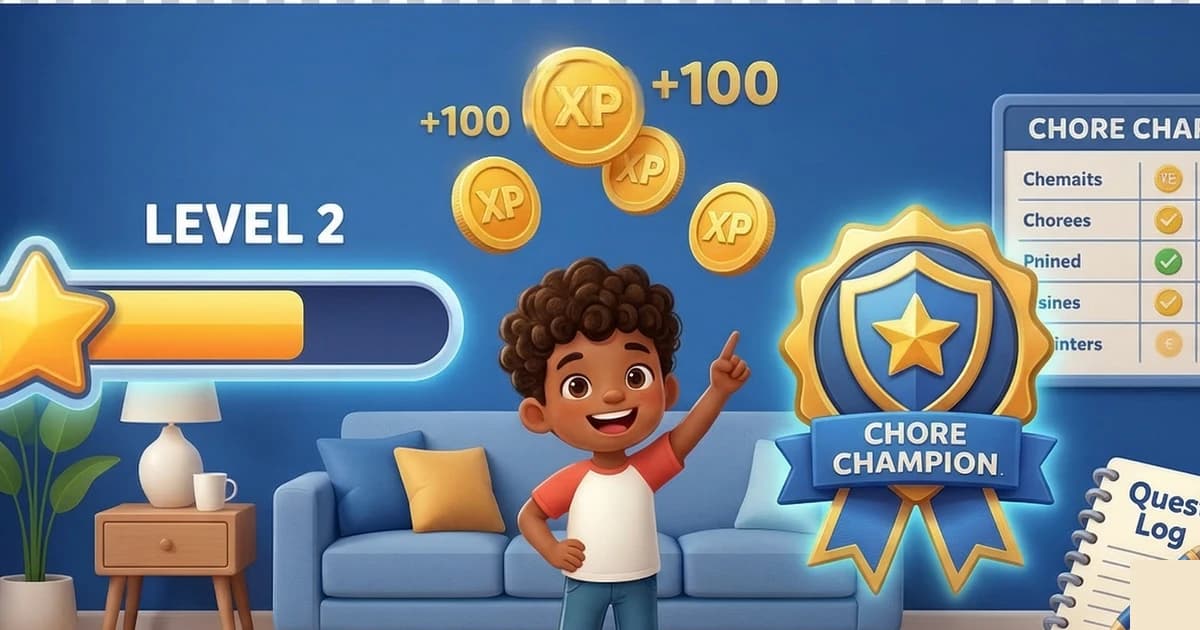
Your Kids Already Understand Gamification
Watch any kid play a video game for five minutes and you'll see something remarkable: total focus, persistent effort, and genuine excitement about completing tasks that are, objectively, repetitive.
Collect 100 coins. Defeat 10 enemies. Reach the next checkpoint.
Now ask that same kid to put away their laundry and you'll get an eye roll that could power a small city.
The difference isn't the task. It's the system around it. Games are masterfully designed to make effort feel rewarding. And the good news? You can use the same principles at home — no coding required.
The Psychology: Why Points and Levels Work
Gamification isn't a gimmick. It's grounded in real psychology. Here's what's happening in your child's brain when a game (or a gamified system) is working:
Dopamine and the Progress Loop
Every time your child earns a point, levels up, or unlocks a badge, their brain releases a small hit of dopamine — the "I did it" chemical. This creates a progress loop: do the thing, feel good, want to do the thing again.
Static chore charts miss this entirely. There's no "moment" of success — just a checkbox that sits there.
Mastery and Competence
Psychologist Edward Deci's research on self-determination theory shows that humans (kids included) are driven by three core needs: autonomy, competence, and relatedness. Gamification nails at least two of these.
When a child moves from "Helper" to "Sidekick" to "Champion," they experience genuine competence growth. They can see themselves getting better, and that feeling is deeply motivating.
The Power of Near-Misses
Games are brilliant at keeping you engaged when you're almost there. "You're 20 XP away from the next level!" is far more motivating than "You still have 5 chores left this week." Same effort, completely different framing.
Gamification at Home: A Practical Guide
You don't need an app to start (though it helps). Here's how to bring game mechanics into your family routine:
Start with Points
Assign point values to tasks based on effort and importance. Easy tasks (making the bed) might be worth 10 points. Harder ones (cleaning the bathroom) could be worth 50. The key is consistency — kids need to trust that the system is fair.
Add Levels
Create a progression system that gives kids something to work toward. Here's an example:
- Helper (0-200 XP) — Just getting started
- Sidekick (200-500 XP) — Building good habits
- Champion (500-1000 XP) — Consistently contributing
- Hero (1000-2000 XP) — A reliable family team member
- Legend (2000+ XP) — The family MVP
Each level should feel like a real achievement. Celebrate it. Make it visible.
Introduce Badges for Bonus Moments
Badges reward specific behaviors beyond the daily routine. A "First to Finish" badge for completing chores before anyone else. A "Streak Master" badge for seven days in a row. A "Helping Hand" badge for doing someone else's chore without being asked.
Badges create surprise and delight — those memorable moments kids talk about at dinner.
Create Quests, Not Chore Lists
Language matters. "Empty the dishwasher" is a chore. "Complete the Kitchen Quest" is an adventure. It sounds silly, but framing tasks as missions changes how kids perceive them.
"My son literally said 'I need to grind some XP' while vacuuming the living room. I don't know whether to laugh or cry." — Inspired by real conversations in parenting communities
The FamHero Way: In FamHero, every task is a quest with XP rewards. Kids progress through levels — from Helper all the way to Legend — unlocking badges along the way. The gamification system makes chores feel like a game because, well, it kind of is one.
Common Mistakes (and How to Avoid Them)
Don't Over-Reward
If every task earns a massive reward, the system loses meaning fast. Keep rewards proportional to effort. The goal is motivation, not bribery.
Don't Punish with Points
Taking away XP as punishment undermines the entire system. Earned progress should stay earned. Instead, use natural consequences — if chores aren't done, privileges are paused until they are.
Don't Make It Competitive (Unless Your Kids Thrive on It)
Some families love a leaderboard. Others? It creates World War III at the dinner table. Know your kids. If competition causes conflict, focus on personal bests instead of rankings.
Do Let Kids Have Input
The best gamification systems are co-created. Let kids help decide point values, name their levels, or choose badge designs. When they own the system, they invest in it.
From Extrinsic to Intrinsic Motivation
Here's the part most people miss: gamification isn't about replacing intrinsic motivation with rewards. It's about building a bridge to intrinsic motivation.
Kids start by doing chores for the points. But over time, the habits stick. They start taking pride in a clean room — not because it's worth 20 XP, but because it feels good. The game mechanics are scaffolding. Eventually, the scaffolding comes down and the habits remain.
This is exactly the approach behind FamHero's quest system. Tasks start as XP-earning missions, but the real goal is building kids who contribute to the family because they want to — not because there's a chart on the fridge telling them to.
Ready to Try It?
You don't need to build a complex system overnight. Start with one or two chores, assign some points, and see how your kids respond. Most parents are surprised by how quickly the dynamic shifts.
And if you want a system that handles all the tracking, leveling, and badge-unlocking for you — that's exactly what FamHero's chore system is built to do.