
Family Chore Systems That Actually Work (Yes, Even with Kids)
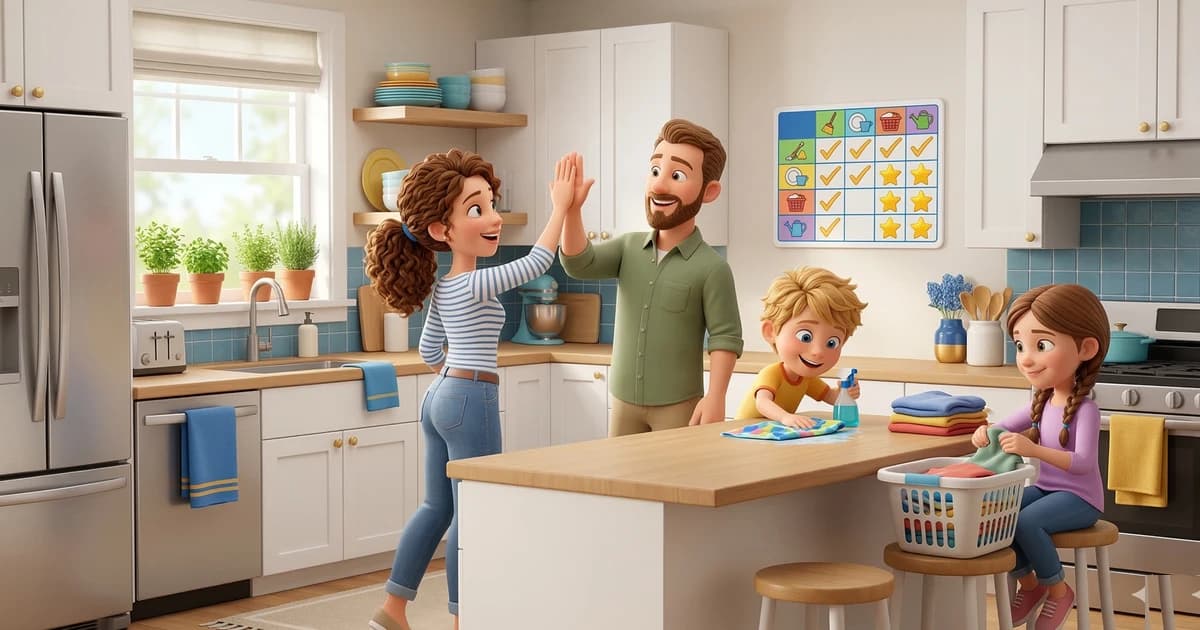
The Great Chore Chart Graveyard
Let's be honest: most families have tried at least three different chore systems. Maybe you started with a shiny magnetic chart on the fridge. Maybe you downloaded an app, printed some stickers, or went full spreadsheet mode.
And for a few glorious days, it worked. Your kids were checking off tasks. You felt like a parenting genius.
Then life happened. Soccer practice ran late. Someone "forgot." The chart migrated behind the fridge where it now lives next to a petrified raisin and a birthday party invitation from 2024.
You're not alone. And you're definitely not failing.
Why Traditional Chore Charts Fall Apart
The problem isn't your kids (okay, not entirely your kids). It's that most chore systems are designed for adults and handed to children. They rely on self-discipline, memory, and intrinsic motivation for tasks that feel, frankly, boring.
Here's what the research says: kids respond to immediate feedback, visible progress, and a sense that their effort matters. A static chart offers none of these things.
5 Strategies That Actually Stick
1. Make It Visual and Immediate
Kids need to see progress happening in real time — not at the end of the week during a "chore review meeting" that no one enjoys. Whether it's moving a magnet, filling a progress bar, or earning points, the feedback loop should be short and satisfying.
2. Match Chores to Age and Ability
Nothing kills motivation faster than a task that feels impossible. A 5-year-old can sort laundry by color. A 10-year-old can load the dishwasher. A teenager can cook a simple meal (and might even enjoy it). Set the bar where kids can succeed, then gradually raise it.
3. Build in Choice
"Do your chores" feels like a command. "Pick two from this list" feels like a choice. When kids have agency over which tasks they tackle, they're more likely to follow through. Even small choices create buy-in.
4. Connect Effort to Something Meaningful
Allowance works for some families, but it's not the only motivator. Some kids respond to earning privileges (screen time, a special outing). Others thrive on recognition — a simple "I noticed you cleaned the bathroom without being asked" goes a long way.
The key is linking the doing to something the child actually cares about.
5. Expect Imperfection (and Keep Going)
Your kid will not load the dishwasher the way you do. That's okay. If you redo their work every time, you're teaching them that their effort doesn't count. Lower your standards a notch, praise the attempt, and save the re-arrangement for when they're not watching.
The Real Talk on Chore Motivation
"I made a chore chart. Laminated it. Put magnets on it. My kids used it for three days and now it's behind the fridge." — Inspired by real conversations in parenting communities
The FamHero Way: In FamHero, emptying the dishwasher isn't a line on a chart — it's a quest worth 50 XP. Kids see their progress bar fill, unlock new levels, and actually ask what chores are available. Because when taking out the trash gets you closer to "Champion" rank, suddenly it doesn't feel like a chore at all.
What Makes a Chore System Sustainable
The best chore systems share three traits:
- Low friction — It shouldn't take more effort to manage the system than to do the chores themselves.
- Kid-friendly interface — If your child can't use it independently, it becomes your chore to manage.
- Built-in motivation — Whether it's points, levels, badges, or simple acknowledgment, the system should make effort feel rewarding.
This is exactly why we built FamHero's chore system the way we did. Every chore is a quest. Every quest earns XP. Every level unlocked is a genuine source of pride for your kid.
And paired with gamification features like badges and family leaderboards, it turns the daily grind into something kids actually look forward to.
Start Small, Stay Consistent
You don't need to overhaul your entire household in a day. Pick one or two chores, set clear expectations, and commit to the system for at least two weeks before deciding if it's working.
The families who succeed with chores aren't the ones with perfect systems — they're the ones who keep showing up, adjusting, and celebrating small wins along the way.
Your kids are more capable than you think. They just need a system that speaks their language.