
Age-Appropriate Chores for Kids: A Chore Chart by Age
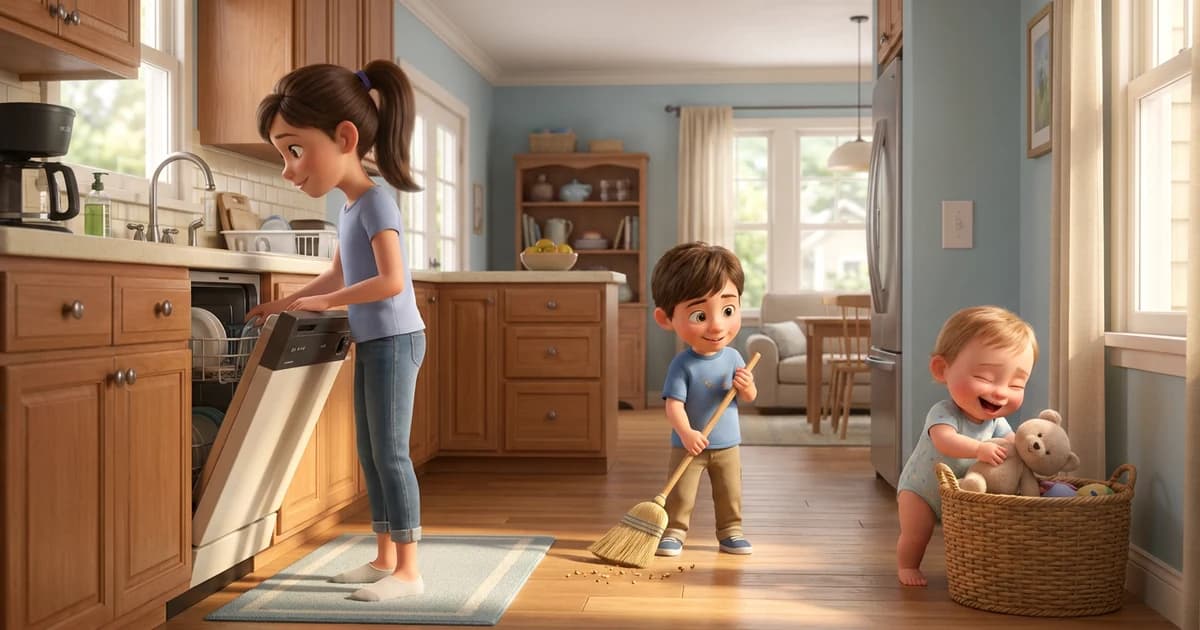
Most chore battles start with a mismatch: the task is either too hard for the kid, so it ends in frustration, or so far below them that it feels like busywork and they tune out. Getting the fit right is quietly one of the biggest predictors of whether a kid sticks with it. You want a chore that's a genuine, doable stretch for that age.
So here's a practical, age-by-age chart of chores kids can actually handle, from toddlers to teens. It's a starting point, not a rulebook. You know your kid, and a mature 6-year-old may do "8-year-old" chores while a busy 10-year-old eases in slower. Use it to pick a few that fit, not to assign all of them at once.
Want to keep this? It's all on this page: no sign-up, no download wall. Print this page (or save it to your phone) and you've got the whole chart on the fridge in two minutes.
How to use the chart (three quick rules)
- Start with two or three, not the whole column. A kid who nails three chores beats a kid overwhelmed by ten. Add more as the first ones become automatic.
- Match the chore to the kid, not just the birthday. The ages below are typical ranges. Slide up or down based on what your child can genuinely handle today.
- "Doable stretch" is the sweet spot. Slightly harder than what they've mastered, not so hard it needs you hovering. That's where kids feel capable, and capable kids keep going.
The chore chart, by age
Ages 2–3 (toddlers): "I can help"
At this age the goal isn't clean floors. It's the identity of being a helper. Keep tasks tiny, do them together, and expect to redo some of it. That's fine; you're planting the seed.
- Put toys in a bin
- Drop dirty clothes in the hamper
- "Dust" low surfaces with a sock on their hand
- Put books back on a low shelf
- Throw trash in the can
- Carry their (unbreakable) plate to the counter
Ages 4–5 (preschool): "I can do it myself"
Now they crave independence. Lean into it: tasks they can finish alone and feel proud of.
- Make their bed (loosely: pulling the blanket up counts)
- Feed a pet with a pre-measured scoop
- Set the table (napkins, non-breakables)
- Match socks from the laundry
- Water plants
- Put away their own clean clothes in low drawers
- Clear their spot after a meal
Ages 6–8 (early elementary): "I have a job"
Kids this age can own a recurring responsibility and follow a short list. This is the age the visible-list, no-nag approach really starts to pay off.
- Make their bed properly
- Get themselves dressed and pack their backpack
- Sort laundry into lights and darks
- Wipe down counters and the table
- Take out small trash bins
- Help load/unload the dishwasher (hand up the safe items)
- Sweep with a hand broom
- Feed and give water to pets on their own
Ages 9–11 (tweens): "I can run part of the house"
They can handle multi-step tasks and start doing things that genuinely take work off your plate.
- Run the dishwasher start to finish
- Wash, dry, and fold a load of laundry with supervision
- Vacuum rooms
- Take out and bring in the trash/recycling
- Help prep simple parts of a meal (wash veggies, measure)
- Rake leaves or basic yard tidying
- Make a simple breakfast or pack their own lunch
- Keep their room to an agreed standard
Ages 12–14 (early teens): "I'm nearly self-sufficient"
Real responsibility, less oversight. These are the chores that build actual life skills.
- Do their own laundry start to finish
- Cook a simple meal for the family occasionally
- Mow the lawn (where age/safety rules allow)
- Clean a bathroom (sink, toilet, mirror)
- Watch younger siblings for short stretches
- Load, run, and empty the dishwasher as a standing job
- Take responsibility for a pet's full care
Ages 15+ (teens): "Preparing to leave the nest"
Treat these as the competencies of an adult-in-training. The aim is that nothing about running a home is a mystery by the time they move out.
- Plan and cook full meals
- Grocery shop from a list (and to a budget)
- Deep-clean rooms
- Run errands
- Manage their own schedule and commitments
- Basic home upkeep (change a bulb, take out heavy trash, simple repairs)
- Help manage a younger sibling's routine when needed
A quick word on allowance by age
Parents often ask how allowance should scale with age. There's no single right number. Families approach this very differently, and what matters more than the amount is the consistency and what you're teaching with it. A few common-sense principles that hold regardless of the dollar figure:
- Tie the "why" to the age. For younger kids, allowance is a hands-on way to learn that money is earned and that it runs out. For teens, it's practice at budgeting real amounts for real wants before the stakes get high.
- A common approach is to scale roughly with age and responsibility: a small amount for the early-elementary set, more as chores get bigger and money lessons get more real. Pick a number that fits your budget and values; there's no universal "correct" allowance.
- Decide whether allowance is tied to chores or separate. Some families pay per completed chore; others give a base allowance for being part of the household and reserve pay for bigger "above and beyond" jobs. Both work. Just be consistent so the deal is clear.
- Make "what did I earn?" easy to see. Money lessons land when a kid can watch their balance grow and choose to spend or save. The tracking is where the learning happens.
Setting up chores and allowance together this week? Join the FamHero waitlist and we'll tell you the day there's a family app that keeps the chart and the allowance in one place, so both stay current without you re-drawing anything.
From a paper chart to something that keeps itself current
Printing this chart is a great start. The honest limitation of any printed chart is that it doesn't move or update: you re-draw it every week, it only exists on the one wall it's taped to, and there's nothing in it that makes a kid want to check it. Those are the reasons fridge charts tend to fade after a month, not because the chart was wrong, but because paper has a ceiling. (More on that, and on building a chore routine kids don't abandon: why most chore setups get dropped and what makes one stick, and how to get kids doing chores without the constant reminders.)
Where FamHero fits — and the honest part
We're building FamHero to be the version of this chart that keeps itself current. The age-appropriate chores live in the same app as the family calendar, the meal plan, and the allowance. So a chore travels with the kid on their own screen instead of hanging on one wall, resets on its own instead of needing a weekly redraw, and connects to the allowance so kids can actually see what they've earned. Because it's one app instead of five, the chart stays alive as part of everyday family life rather than becoming another thing to maintain.
Here's the honest part: FamHero isn't available to download yet. We're pre-launch. So today, the most useful thing on this page is the chart above — print it, put it up, and start. We'd rather tell you that than pretend an app you can't get yet is the answer.
And we'll be straight about cost: FamHero is a subscription, $9.99 a month or $99.99 a year. There's a free way in, and at launch a 14-day free Pro trial, no credit card required, full feature access. You try the whole thing with your real family before paying anything, with no card on file to cancel.
If you want a living, age-aware chore chart that keeps itself up to date and grows with your kids from toddler tasks to teen responsibilities, join the waitlist and we'll email you the day FamHero goes live.
Until then: pick two or three chores that fit each kid, print the chart, and start this week. The right-sized chore, done consistently, is what turns "my parent makes me" into "this is just my job" — and that shift is worth more than any perfect list.